In this guide
Quick answer
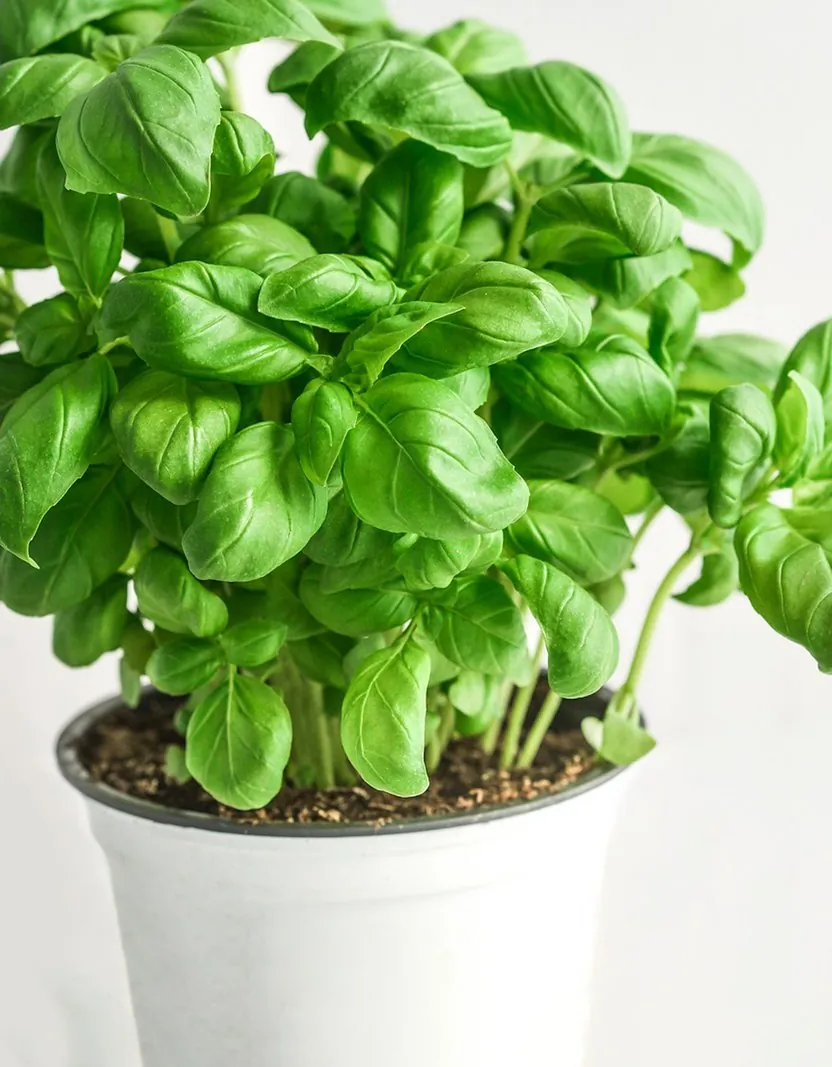
Sow basil seeds 1/8 inch deep in warm mix (about 75°F) indoors 6-8 weeks before your last frost, or outdoors once nights stay above 50°F. Seeds sprout in 5-10 days. Plant 12 inches apart in full sun, pinch the tips when plants have 3-4 pairs of leaves, and keep pinching off flower buds. One well-pinched plant gives a handful of leaves every week.
Basil is one of the easiest herbs to grow from seed, as long as you remember one thing: it hates cold. Cold soil, cold nights and cold drafts all stunt it. Warm it up and it grows fast.
Eight basils compared
| Variety | Flavor | Best for | Notes |
|---|---|---|---|
| Genovese | Classic sweet basil, clove notes | Pesto, caprese | The Italian standard |
| Large Leaf Italian | Mild, sweet | Wraps, sauces, big harvests | Leaves can reach hand size |
| Sweet basil | Sweet, balanced | Everyday cooking | Reliable all-rounder |
| Thai basil | Anise and licorice | Curries, stir-fries, pho | Purple stems; holds up to heat |
| Lemon basil | Bright lemon | Fish, salads, tea | Smaller leaves; bolts sooner |
| Cinnamon basil | Warm, spicy | Fruit, baking, tea | Purple stems and flowers |
| Purple Dark Opal | Mild, slightly spicy | Garnish, flavored vinegar | Deep purple leaves |
| Red Rubin | Sweet, like Genovese | Color in salads | Holds its purple color well |
When to plant basil seeds
- Indoors: 6-8 weeks before your last frost. Use a heat mat if your house is cool.
- Outdoors: 1-2 weeks after your last frost, once nights stay above 50°F and the soil is warm. Basil set out too early sits still or turns black at the leaf edges.
- Succession: sow a few more seeds every 3-4 weeks through midsummer. Young plants are more productive and slower to bolt than old ones.
How to sow basil
- Fill cells or pots with damp seed-starting mix.
- Sow 3-4 seeds per cell, 1/8 inch deep. Basil seed turns gel-coated when wet; that's normal.
- Keep the mix warm (70-80°F) and damp. Seedlings appear in 5-10 days.
- Move seedlings under a light 2-4 inches above them right away. Thin to the strongest seedling once true leaves appear.
- Pot up into 3-4 inch pots if they outgrow cells before it's warm enough outside.
- Harden off for a week, then plant 12 inches apart (8-10 inches for smaller types like lemon basil) in full sun.
Pinch for a bushy plant
This is the most important step. When a plant has 3-4 pairs of true leaves, cut the stem just above the second or third pair. Two new shoots grow from that point. Repeat on each new shoot every couple of weeks. In a month you'll have a bushy plant instead of one tall stem.
Always harvest by cutting above a leaf pair, never by pulling single leaves off the bottom.
Why basil bolts and how to slow it
"Bolting" means flowering. Once basil flowers, the leaves get smaller and more bitter. Heat, long days and stress all trigger it.
- Pinch off flower buds the moment you see them.
- Harvest regularly; a plant that's being cut keeps making leaves.
- Water deeply during heat waves and mulch the soil.
- Keep a younger succession planting coming along.
Thai, cinnamon and lemon basil flowers are attractive to bees. Letting a plant or two bloom at the end of summer is a nice thing to do for pollinators.
Growing basil in pots
Use a pot at least 8 inches wide for one plant, with drainage holes. Put it in the sunniest, warmest spot you have. Pots dry out quickly in summer heat, so check daily. Feed lightly every 3-4 weeks with a balanced liquid fertilizer at half strength.
Problems and fixes
- Seedlings falling over: damping off from cold, wet mix. Use fresh mix, water from below, add warmth.
- Black or brown spots after a cold night: chill damage. Wait for warmer nights before planting out.
- Yellow leaves with gray fuzz underneath: basil downy mildew, common in humid late summer. Space plants for airflow, water the soil not the leaves, and remove affected plants.
- Holes in leaves: slugs or Japanese beetles. Hand-pick in the evening (slugs) or morning (beetles).
Storing basil
Fresh basil blackens in the refrigerator. Keep stems in a glass of water on the counter, like flowers. For long storage, blend leaves with olive oil and freeze in ice cube trays, or make pesto and freeze it.
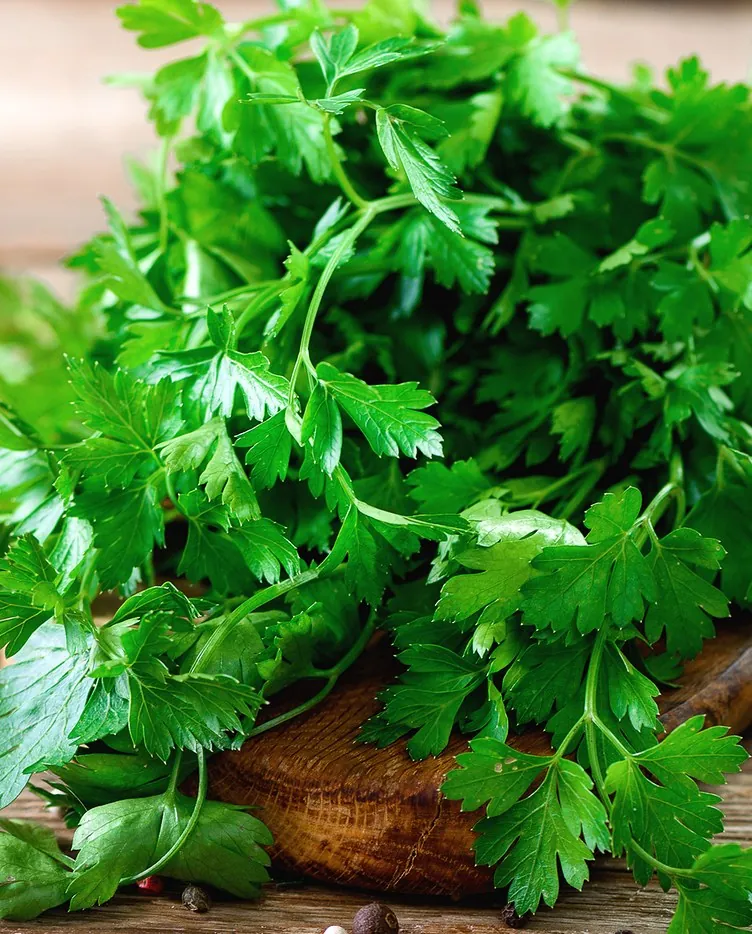
Basil pairs well with parsley, chives and cilantro in a small bed. Our kitchen herb garden guide has a simple layout, and the herbal tea garden guide covers lemon and cinnamon basil for tea.
Frequently asked questions
How long does basil take to grow from seed? About 4-6 weeks to the first small harvest and 8-10 weeks to a full-size plant, depending on warmth and light.
Can I grow basil indoors? Yes, with a grow light or a very bright, warm south window. See our guide to windowsill herbs in winter.
Will basil come back next year? No. Basil is an annual and dies at the first frost. You can save seed from open-pollinated varieties, but different basils planted together can cross.